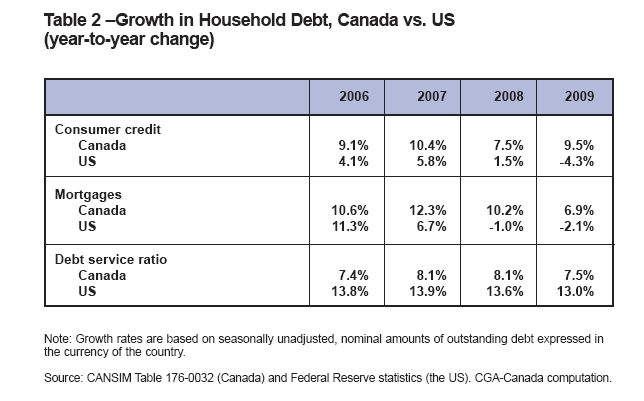
Beyond doubt that the Canadians have been taking advantages of the low interest rate to load up mortgage debtin the past 2-3 years. The following table shows that Canadian household debt continued to increase in 2008 and 2009 while in the U.S. it decreased.
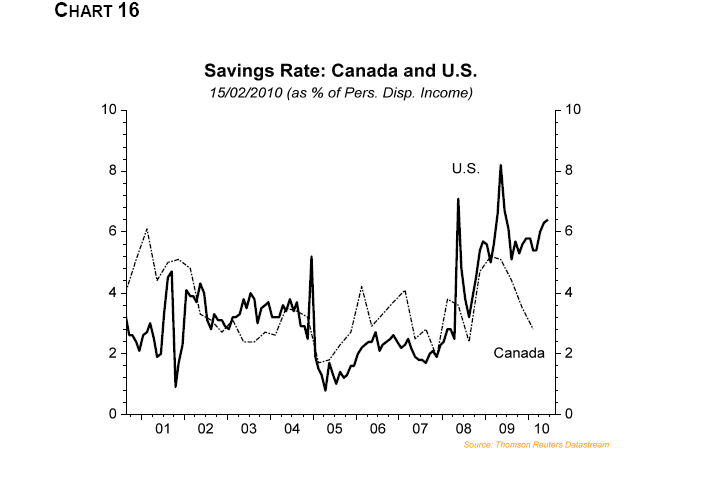
On the other hand, this chart in a report from the Boeckh Investment showns the divergent path for saving rates in the two countries:
Houshold debt as a % of disposable income has risen from the 90% in 1980s to over 145 in 2010.
One piece of good news from the CIBC Benjamin Tal's recent report (June 2010) is the rate of growth has recently slowed down. Tal pointed out the rise in Canadians' credit for the six months ended in March was slower than the expansion of nominal gross domestic product, which include the effects of inflation, and it's the first time in more than seven years that's happened.
With the economic recovery now on solid footing in Canada, Tal said it's positive that the rate at which household debt grows is slowing. He said the recent economic downturn marked the first recession on record in which overall household debt grew.
While debt continues to rise faster than income, Tal said what's more important is that asset levels — which include investments and real estate — are growing at a faster pace than household debt.

No comments:
Post a Comment